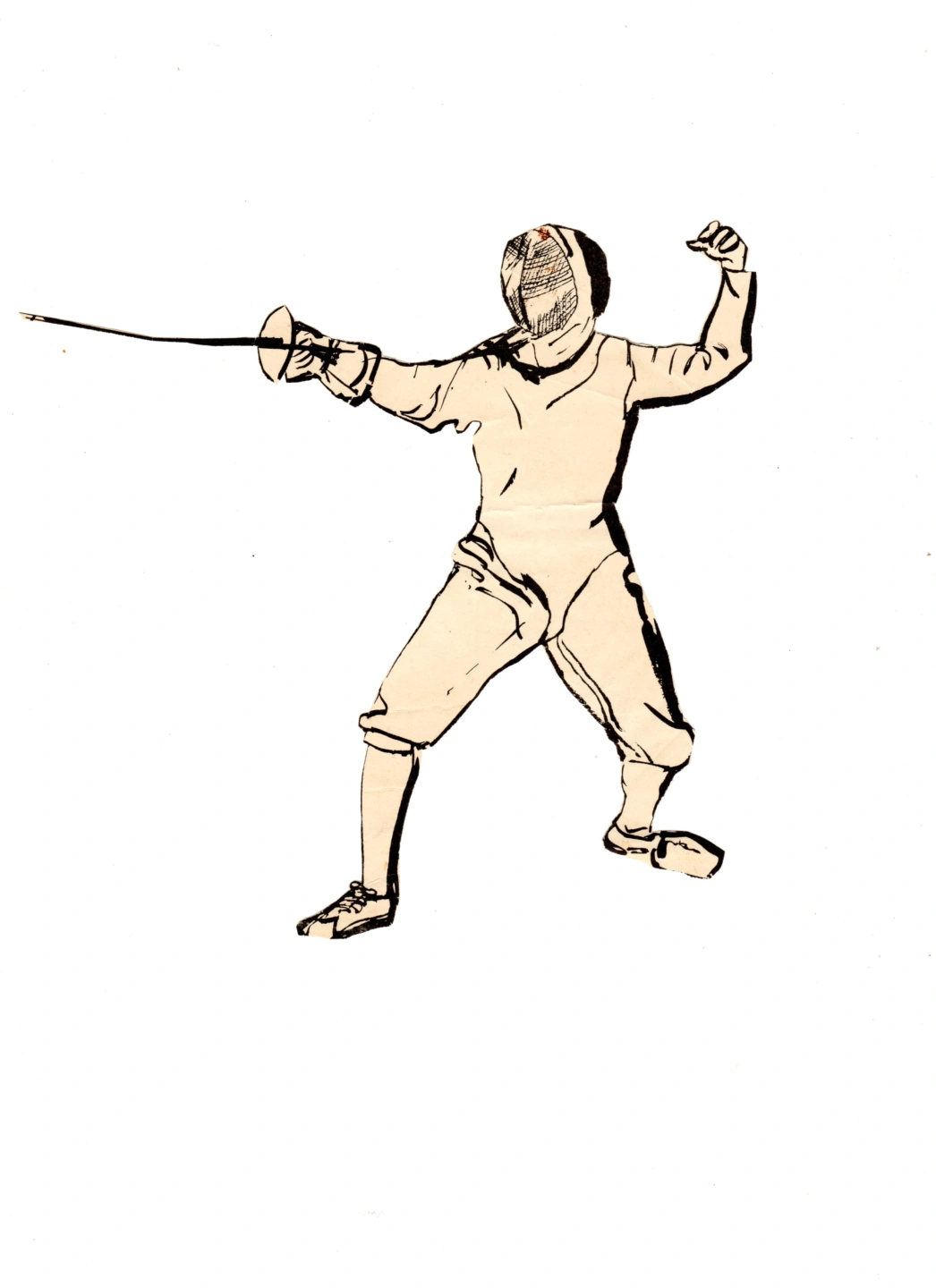
FENCING a background to the sport in (Western) Australia
EDITOR'S NOTE
This website started life as a comprehensive book to capture the background and history of fencing in Western Australia by the late George Osgood. Additional material has been added (with particular acknowledgement to the work of Richard Emmerick and Daryl Adair) to try to add further context (and perhaps reach a wider audience).
The site is a work in progress and further submissions (both in relation to new content and suggestions for edits) are very welcome. I have added a feedback form to provide feedback.
Some recollections may be subjective or vague. I have tried to faithfully reproduce George's detailed research which included interviews with eminent members of the fencing community and/or the relations thereof.
This material is not intended to cause upset or conflict. To the extent that I can present different perspectives I will be pleased to do so and if there are verifiable mistakes then I am happy to make corrections accordingly.
DEDICATION
This book is dedicated to my dear wife, Maxine, without her incredible patience this book would have never survived to see its completion.
Also to my children – Michelle, Desiree and Dean who suffered the same frustrations and the dogs that got walked when my ideas ran dry.
Please enjoy!!
George
INTRODUCTION
This book is about the sport of fencing, fencers and the Fenced!!
Mum, and all us Kids have endured years of the making of this book. Those of you who know Dad will appreciate the effort he has put into this book. Hours of research, a learning experience for us all!
So I hope you will enjoy reading this book and I hope it shows you the dedication of the fencers in Western Australia.
Cheers, Desiree Osgood
ACKNOWLEDGEMENTS
John A D Treloar; Barbara Sayers (nee Wrench); Graham Donley; Ron Newick; Rhonda Algaba (nee Hills); Laurie Liedel; Frank Over; Shirley Bruce (nee Brophy); Barry Osgood (my twin brother).
Rhonda Algaba (nee Hills) – for all of her marvelous help and also for being our secretary
Shirley Bruce (nee Brophy) – the granddaughter of Professor Henry Seguy
Barbara Sayers (nee Wrench) – for all the valuable information sent from England
Helen Smith – President, Australian Fencing Federation c 2002
Graham Donley – his early proof reading for me was greatly appreciated
Vincent Pownall: Passed away on 20th March 2002 before I could complete this book, for his assistance in writing his memoirs and for all of the meetings he attended for the book and all the meetings he attended for Postal Institute Fencing Club and Swords Club
COPYRIGHT
The copyright of original material within this book is held by the Author.
Should any infringement of the copyright of material belonging to any other person or organisation, have occurred in error, the Author tenders his apologies.
FOREWORD
Some years ago, George Osgood, Western Australian State Title Holder, expressed to me his concern that the early years of the sport of fencing and its development, particularly during the 1950s and 1960s were, for the most part, unknown to the current generation of people who are rekindling interest in fencing in this State.
Since that time, George has devoted a great amount of his time in research; contacting fencers from those earlier years with the intention of accumulating as much information as possible to ultimately produce a history of the sport of fencing in Western Australia.
Of more recent times, a number of meetings have been held at which many of those attending were able to present a considerable amount of information in all forms to George.
After many hours of sifting, collating and selecting suitable information the desired “FENCING – an early History of the sport in Western Australia” has been accomplished.
I wish at this point to personally and on behalf of the other “OLD BOYS” congratulate George for the time taken by him in dedicating himself to this work.
Ron Newick
AUTHOR’S INTRODUCTION
The sword has always conjured up certain romanticism, be it in visions of armoured knights clashing broadswords in combat from their fiery steeds or Royalists and Roundheads pitting their skills and strengths with the blades during the civil war in the 17th Century in England. Then in later times the development of the art of swordplay moved from the field of battle to the duel of honour, the training school or academy until its development as an Olympic sport. As such the international popularity of the sport has provided years of enjoyment to many people within the State of Western Australia.
The earliest known fencing practices in the State of Western Australia were in a gymnasium called the Perth Athletic Hall in Perth in 1891.
The art of fencing, which is defined as “the use of a sword”, has been practiced by the human race since before the dawn of recorded history. Certainly by the Bronze Age swords were in current use. Indeed, all of the ancient races, including the Persians; Romans; Babylonians and Greeks paid great attention to swordsmanship. There is also some record of a fencing match in a relief carving in a temple built around 1190 B C situated in Luxor, in the North of Egypt.
Early swords were heavy, big and clumsy and sheer brute strength was needed to handle them, although a lot of skill was also needed to use these objects.
When the gunpowder of the 15th Century was invented, it ended the use of heavy armour and this was when fencing started to become an art. By now, the weapons had become lighter and easier to manage. This brought in the Guild of Fencing Masters with all of the skills required in using the weapons.
The Italians are credited with being the first to concentrate on the skilful use of the point of the weapon rather than the edge. With the lighter weapons and nimbler, more controlled play, it spread quickly throughout Europe. By the end of the 16th Century, it was formalised as Rapier Fencing. The masters abandoned most of the wrestling tricks when they discovered the lunge. Now fencing was an art that may have been said to date from that period in time.
Now that the weapon was lighter, it was possible to make all the right attacking and defensive moves much quicker and faster. The sword could also be wielded in one hand and a dagger or another weapon in the other. Thus swordplay had become an art. Now a great amount of skill was needed.
By the 17th Century, the small sword and the backsword, also known as the Sabre, were the chief weapons that were used in fencing in that period of time. The smallswords were swords with which hits were made with the point and only defensive moves were made with the blade. Every gentleman in the art of fencing was educated in these moves.
The speed and dexterity, with which the light sword was used in close quarters, involved the risk of severe injury to the eyes. At this time the mask was unknown, so it became necessary to impose a number of basic rules to minimise the risk for valid hits to be only at the breast. An attacker was not allowed to complete his movement unless he was completely parried, before his opponent could in turn commence his attack. So fencing had become increasingly complex.
In 1780 the French master, La Bossie, invented the mask. This brought about a great change in fencing technique. This included attack; the remise; counter riposte redoublement and other sequences without undue risk to the eyes.
The art of fencing, which is defined as “the use of a sword”, has been practiced by the human race since before the dawn of recorded history. Certainly by the Bronze Age swords were in current use. Indeed, all of the ancient races, including the Persians; Romans; Babylonians and Greeks paid great attention to swordsmanship. There is also some record of a fencing match in a relief carving in a temple built around 1190 B C situated in Luxor, in the North of Egypt.
Early swords were heavy, big and clumsy and sheer brute strength was needed to handle them, although a lot of skill was also needed to use these objects.
When the gunpowder of the 15th Century was invented, it ended the use of heavy armour and this was when fencing started to become an art. By now, the weapons had become lighter and easier to manage. This brought in the Guild of Fencing Masters with all of the skills required in using the weapons.
The Italians are credited with being the first to concentrate on the skilful use of the point of the weapon rather than the edge. With the lighter weapons and nimbler, more controlled play, it spread quickly throughout Europe. By the end of the 16th Century, it was formalised as Rapier Fencing. The masters abandoned most of the wrestling tricks when they discovered the lunge. Now fencing was an art that may have been said to date from that period in time.
Now that the weapon was lighter, it was possible to make all the right attacking and defensive moves much quicker and faster. The sword could also be wielded in one hand and a dagger or another weapon in the other. Thus swordplay had become an art. Now a great amount of skill was needed.
By the 17th Century, the small sword and the backsword, also known as the Sabre, were the chief weapons that were used in fencing in that period of time. The smallswords were swords with which hits were made with the point and only defensive moves were made with the blade. Every gentleman in the art of fencing was educated in these moves.
The speed and dexterity, with which the light sword was used in close quarters, involved the risk of severe injury to the eyes. At this time the mask was unknown, so it became necessary to impose a number of basic rules to minimise the risk for valid hits to be only at the breast. An attacker was not allowed to complete his movement unless he was completely parried, before his opponent could in turn commence his attack. So fencing had become increasingly complex.
In 1780 the French master, La Bossie, invented the mask. This brought about a great change in fencing technique. This included attack; the remise; counter riposte redoublement and other sequences without undue risk to the eyes.